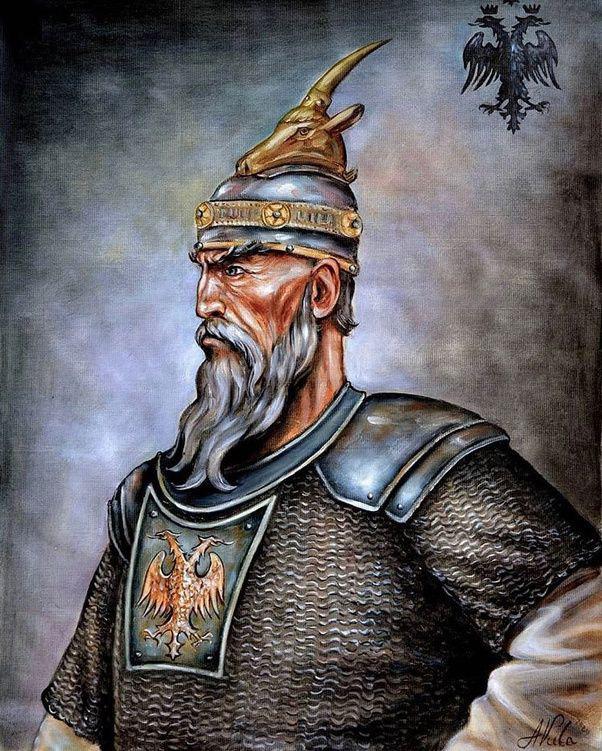
⚔️ Skanderbeg
(Albanian: Gjergj Kastrioti Skënderbeu, c. 1405–1468)
Skanderbeg was an Albanian nobleman, military commander, and the leading figure of the Albanian resistance against the Ottoman Empire in the 15th century. He is regarded as the national hero of Albania and a symbol of freedom, unity, and the defense of Europe against Ottoman expansion.
📌 Key Facts
Born: May 6, 1405, in northern Albania
Died: January 17, 1468, in Lezhë
Family: Son of Prince Gjon Kastrioti; married to Donika Kastrioti
Ottoman Title: Iskender Bey (“Lord Alexander”)
Papal Honor: Named “Athleta Christi” (“Champion of Christ”) by Pope Callixtus III
🏹 Early Life and Rise to Power
As a child, Skanderbeg was taken hostage to the Ottoman court, where he was educated in the elite Enderun palace school system. He converted to Islam, received military training, and served for nearly twenty years in the Ottoman army.
In 1443, during the Battle of Niš, he deserted the Ottoman forces along with approximately 300 Albanian followers. He returned to Albania, captured Krujë, and declared independence from Ottoman rule — marking the beginning of a long and determined resistance.
🛡️ The League of Lezhë and Military Achievements
In March 1444, Skanderbeg united the Albanian principalities in the League of Lezhë, creating a strong military alliance under his leadership. For 25 years, he successfully defended Albanian territories against repeated Ottoman invasions.
His most famous victories include:
Battle of Torvioll (1444)
Battle of Albulena (1457)
Several successful defenses of Krujë
His resistance earned him admiration across Europe. He received support from Venice, the Kingdom of Naples, and the Papacy.
🤝 Relations with Europe
Through the Treaty of Gaeta (1451), Skanderbeg formally placed himself under the protection of King Alfonso V of Aragon, securing military assistance. Pope Callixtus III honored him with the title Athleta Christi, recognizing him as a defender of Christianity.
Between 1460 and 1462, he also led troops in southern Italy to assist Ferdinand I of Naples against his rivals.
🕊️ Death and Legacy
Skanderbeg died of malaria in 1468 in Lezhë. Ten years after his death, Albania fell to the Ottomans (1478). However, his legacy endured for centuries.
In the 19th century, he became the central symbol of the Albanian National Awakening. The red flag with the black double-headed eagle, associated with him, remains the national flag of Albania today.
📚 Cultural Legacy
Writers and historians such as Marin Barleti, Voltaire, and Henry Wadsworth Longfellow immortalized Skanderbeg as a European hero.
Monuments in his honor stand in Tirana, Rome, Paris, and New York — a lasting testament to his influence on Albanian identity and European historical memory.
✨ Skanderbeg remains a powerful symbol of courage, resistance, and national pride — not only for Albanians, but for the broader history of Europe.